
Jane App is one of the best-known practice management platforms for health and wellness clinics. Many physiotherapy clinics, chiropractic clinics, massage therapists, mental health professionals, and wellness practices consider Jane when they need scheduling, online booking, a client portal, and online charting.
But as clinics grow, workflows often become more complex. One client may have multiple case files. Billing may involve different payers, treatment plans, service dates, and account balances. Clinics may need to combine services from more than one appointment on a single invoice, or create an invoice directly from the case file when the charge is not tied to a scheduled visit.
That is when clinics start comparing Jane App alternatives. Some need a simple appointment-centered system with bundled clinical tools. Others need a stronger operational core built around case files, scheduling, billing, accounting, reporting, contacts, and team management.
CaseRM takes the second approach: a case-centric adaptive case management system with the core practice management tools clinics need to run from intake to invoice. Its core subscription supports unlimited users, team members, and locations, with specialized tools such as online charting, online booking, SMS, and integrations available when needed.
This article compares leading Jane App alternatives for health and wellness clinics in 2026 and explains where each option fits best.
Why Clinics Look for Jane App Alternatives
Clinics rarely switch software for the sake of change. They switch when the system no longer supports how the clinic works day to day.
Most clinics start with the basics: booking, automated reminders, clinical notes, intake forms, and client records. Those features matter, but they are only the starting point.
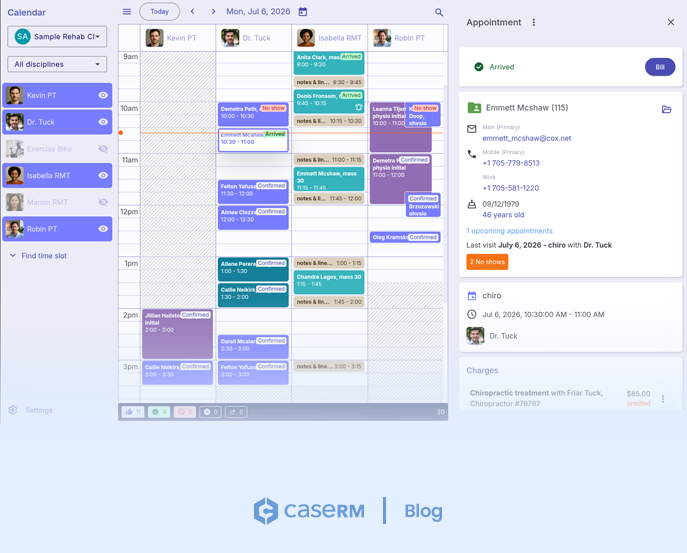
A growing clinic eventually needs more than a calendar and an EMR system. It needs structure for cases, multi-service billing, organized documentation, communication records, provider coordination, and financial tracking.
1. The Clinic Needs More Than Appointment-Based Organization
Many clinic platforms are built around clients and appointments. That works when the practice is simple.
But many health and wellness clinics need more structure. A physiotherapy patient may have one injury, return later with another, and then open a separate insurance-related claim. A mental health client may have a private-pay case and a separate funded program. A multidisciplinary clinic may need records, billing, treatment plans, and documents organized by case.
When everything sits under one flat client profile, staff have to separate details manually that the software should keep clear.
The right Jane App alternative should make it easy to manage multiple case files under one client without mixing documentation, appointments, billing, or financial history.
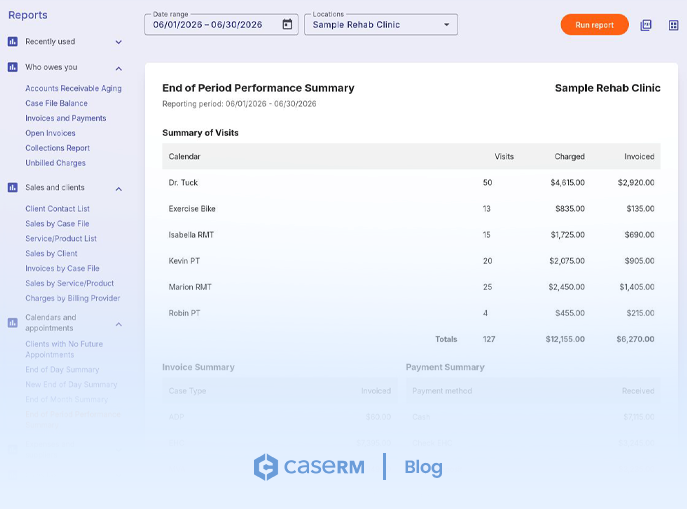
2. Billing Needs to Stay Connected to the Case
Billing is where weak clinic systems often show their limits.
Clinics need to know what was billed, why it was billed, which case it belongs to, whether payment was collected, and what remains outstanding.
That becomes especially important when treatment plans change. At booking, staff may need to see the remaining treatment plan budget. As care changes, providers may need flexibility to apply that budget toward different services than originally planned.
Clinics may also need to invoice for case-related work that is not tied to a scheduled visit, such as reports, forms, planning, preparation, or administrative services.
The right system keeps billing connected to the case, adapts when care changes, and reduces workarounds.
3. The Pricing Model Should Match the Clinic
Pricing is not only about the monthly fee. It is about whether the clinic is paying for the structure and tools it actually needs.
Some clinics want a broad package from day one. Others need a strong operating core with optional extensions. An assessment center may not need clinical notes, a case management firm may not need online booking, and a clinic that does not use SMS should not have to treat SMS as part of its core operating cost.
CaseRM’s core includes case management, appointments, private billing, invoices, payments, reports, team management, unlimited users, unlimited team members, unlimited locations, a global address book, and built-in accounting. Clinics can add digital marketing, online chart notes, SMS, online booking, and third-party claim integrations when needed.
This makes CaseRM a strong fit for clinics that want a solid operating core without paying for specialized tools they do not use.
Quick Comparison: Best Jane App Alternatives for Health and Wellness Clinics
| Software | Best For | Key Strengths | Best Fit |
|---|---|---|---|
| CaseRM | Case-centric health and wellness clinics | Case files, scheduling, billing, direct case-file invoicing, built-in accounting, centralized contacts, multi-calendar support, unlimited users | Growing clinics that need a strong practice management core from intake to invoice |
| Noterro | Smaller allied health clinics | Scheduling, clinical notes, online booking, billing, records | Solo providers and small teams that want a straightforward clinic system |
| Cliniko | Lightweight practice management | Scheduling, treatment records, invoices, payments, online bookings | Small clinics that want a simple international option |
| Practice Better | Wellness and coaching-style practices | Client programs, forms, packages, wellness workflows, client engagement | Nutrition, wellness, coaching, and program-based practices |
| Juvonno | Canadian-feature focused platform | Scheduling, charting, billing, online booking, reporting, patient communication | Clinics comparing broad feature sets and willing to evaluate usability carefully |
1. CaseRM
Best Overall Jane App Alternative for Case-Centric Health and Wellness Clinics
CaseRM is a case-centric adaptive case management system for health and wellness clinics that need more than appointment scheduling. It combines case and client management, scheduling, billing, invoicing, payments, reporting, centralized contacts, SOAP notes, and built-in accounting in one practice management system.
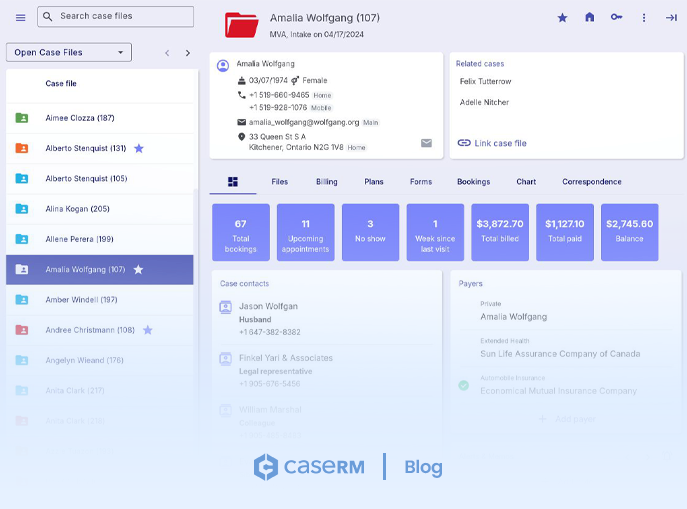
CaseRM is a strong fit for physiotherapy, chiropractic, massage therapy, psychology, mental health, and multidisciplinary rehabilitation clinics, as well as assessment centers and case management firms. It is especially useful when care is organized around case files, treatment plans, insurance-related work, long-running cases, or appointments with more than one billable service.
Familiar Workflows for Clinics Used to Jane App
CaseRM offers clinics familiar scheduling and charting workflows, built on a stronger case-centric foundation.
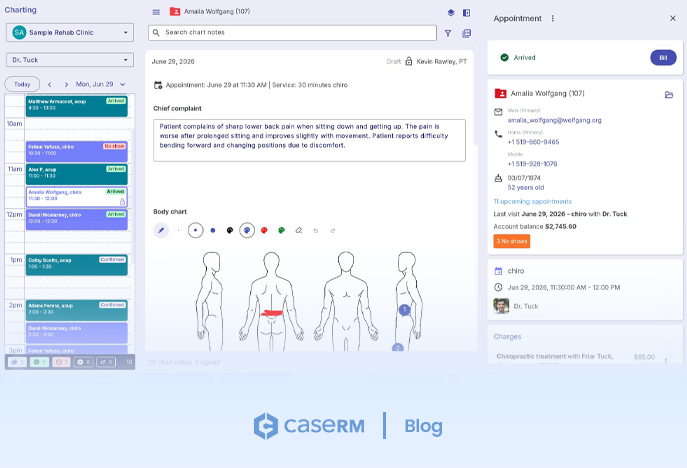
Instead of treating each visit as the main unit of work, CaseRM organizes activity around the client’s case file. A client can have multiple case files, and each case can keep its own appointments, billing activity, invoices, payments, documents, SOAP notes, and related contacts organized in context.
Connected Case Files for Related Clients and Events
Some cases are connected. Several family members may receive care at the same clinic, or several patients may be treated after the same motor vehicle accident.
CaseRM lets clinics draw relationships between case files, making related cases easier to identify and navigate. Staff can also move from one related case file to another, keeping connected care, documentation, billing, and communication easier to follow.
Intake to Invoice, and Everything in Between
CaseRM supports the workflow from intake to invoice. Clinics can manage case files, appointments, services, charges, invoices, payments, reports, and related information in the context of the right case.
This helps front-desk staff, providers, and clinic owners work from the same operational structure instead of piecing together information across disconnected records.
Flexible Invoicing Without Requiring an Appointment
CaseRM does not force every invoice to begin in the appointment book. When billing needs to happen outside a scheduled visit, users can create the invoice directly from the case file.
This keeps billing for case-related services connected to the right case without creating unnecessary appointments or workarounds.
Built-In Core Accounting
CaseRM includes a built-in accounting core for stronger financial visibility. Clinics can manage charges, invoices, payments, credits, account activity, chart of accounts, and transaction categories in the same system used for cases and appointments.
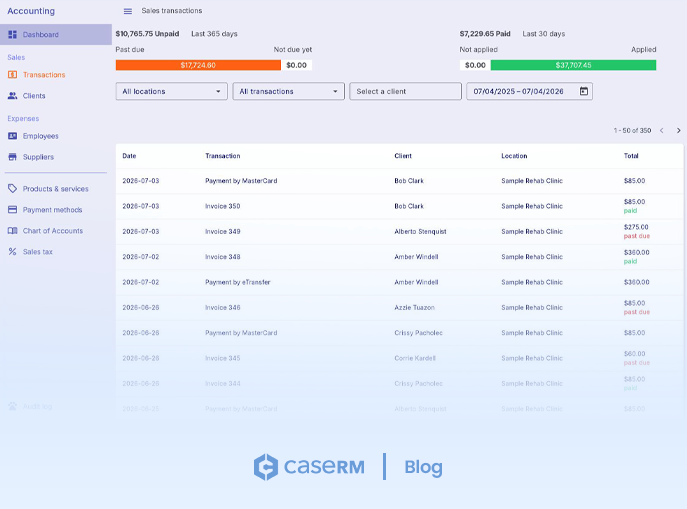
This gives clinic owners a clearer connection between care delivery, billing, and revenue. CaseRM’s accounting objects are also structured with future integrations in mind, including systems such as QuickBooks Online.
Global Address Book
Clinics interact with more than patients. They deal with family members, insurers, adjusters, lawyers, referral sources, family doctors, vendors, and company directory records such as clinic locations, providers, and other team members.
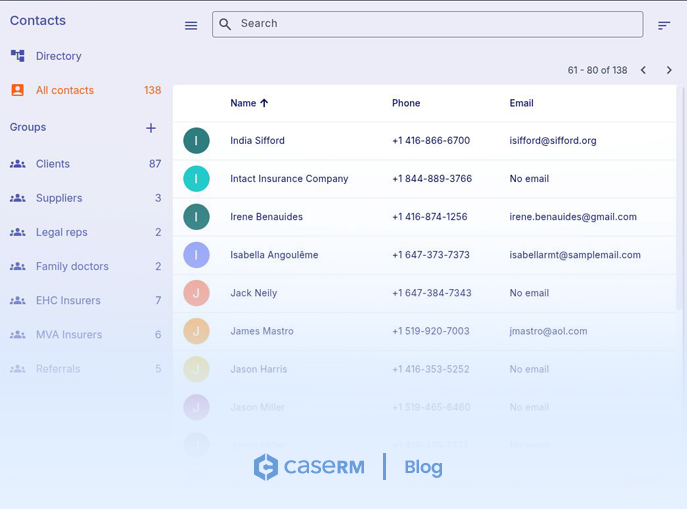
CaseRM’s Global Address Book keeps these relationships organized and connected to the broader clinic workflow.
Core Subscription With Optional Add-Ons
CaseRM’s core subscription supports unlimited users, team members, locations, appointments, and case files. Clinics can add specialized tools such as SOAP notes, SMS, online booking with client portal access, and integrations as needed.
This makes CaseRM a strong choice for clinics that want a solid operating core without paying for tools they do not use.
Verdict
CaseRM is the best overall Jane App alternative for case-centric health and wellness clinics in 2026 because it combines familiar clinic workflows with stronger structure around cases, billing, accounting, contacts, and reporting.
Clinics can book appointments per case file, create invoices for services directly from the case file, add multiple service charges per appointment, and keep billing connected to the right case.
With unlimited users, team members, and locations in the core subscription, CaseRM is a better fit for clinics that manage cases, treatment plans, invoices, payments, documents, online chart notes, and reporting.
2. Noterro
Best for Smaller Allied Health Clinics
Noterro is often considered by allied health practices that want scheduling, SOAP notes, online booking, billing, and patient records in one clinic system.
Its biggest advantage is ease of use. A solo provider or small clinic that does not need a heavier operational structure may find Noterro practical for day-to-day clinic work.
Where Noterro may feel lighter is in more complex practice management scenarios. A growing clinic may eventually need deeper case organization, stronger billing structure, centralized contacts, reporting, and multi-role workflow support.
Verdict
Noterro is a good option for smaller clinics that want a practical day-to-day system. It may be less suitable when the clinic needs deeper structure, stronger billing flexibility, and room to grow.
3. Cliniko
Best for Lightweight Practice Management
Cliniko is a clean, lightweight practice management system used by health clinics and allied health practitioners.
It supports appointment scheduling, online bookings, treatment notes, invoices, payments, reminders, and client records. Its strength is simplicity, especially for smaller clinics that do not need deeper structure.
Cliniko may be less suitable for clinics that need detailed case-centric workflows, built-in accounting, or advanced operational control. Clinics with complex billing, documentation, and case management needs may eventually outgrow it.
Verdict
Cliniko is a good lightweight option. More robust platforms may be a better fit when the clinic needs case-level organization, stronger billing structure, and deeper practice management controls.
4. Practice Better
Best for Wellness, Nutrition, and Program-Based Practices
Practice Better is a strong option for wellness professionals, nutritionists, coaches, and practitioners who run programs or client packages.
It is less of a direct replacement for a case-centric clinic management system and more suited to wellness-style service delivery. Practice Better works well when the business model is built around programs, coaching, wellness plans, client engagement, forms, packages, and virtual or hybrid care.
Practice Better may be less suitable for clinics that need complex case files, third-party billing, case-based documentation, multi-calendar operations, or deeper clinic accounting.
Verdict
Practice Better is a strong wellness platform, but clinics that need case management, billing workflows, documentation, and structured practice operations will usually be better served by a case-centric practice management system.
5. Juvonno
Best for Clinics Comparing Features and Workflow Fit
Juvonno is another clinic management platform that appears in Jane App comparisons. Its feature set covers many areas clinics expect from practice management software, including scheduling, charting, billing, online booking, reporting, and patient communication.
The key question is not whether the feature list looks complete. It is how well those features support daily work for front-desk staff, providers, and clinic owners.
Feature quantity is not the same as workflow quality. A system can offer many modules and still feel difficult to use if the interface is cluttered, the scheduler is awkward, or common tasks take too many steps. Clinics evaluating Juvonno should look closely at usability, scheduling flow, billing workflow, reporting clarity, and day-to-day ease of use.
Clinics should look beyond the feature list and consider how well the system supports daily work across scheduling, documentation, billing, reporting, team access, and administration.
Verdict
Juvonno may look broad on a feature list, but clinics should not judge practice management software by feature count alone. Usability, scheduling flow, billing clarity, reporting tools, and ease of daily use matter just as much.
Jane App vs CaseRM
Jane App and CaseRM both support clinic operations, but they are built around different structures. Jane App is appointment-centered. CaseRM is case-centric, with core practice management tools for cases, billing, contacts, documents, accounting, reporting, and growth from intake to invoice.
| Area | Jane App | CaseRM |
|---|---|---|
| Core workflow | Built primarily around clients, online booking, charting, and payments | Built around case files, appointments, billing, online charting, accounting, and reporting |
| Client and case structure | Better suited to simpler client profiles and visit-based workflows | Designed for multiple case files under one client |
| Billing workflow | Works well for appointment-based billing | Supports appointment billing and direct invoicing from the case file |
| Treatment plan flexibility | More suited to standard appointment-based care workflows | Better suited to changing treatment plans, budgets, and case-based billing decisions |
| Accounting visibility | Focused mainly on billing and payments | Built-in accounting core for stronger financial visibility |
| Contacts and relationships | Handles client and clinic-related contact information | Includes a global address book for clients, payers, lawyers, adjusters, providers, vendors, and related contacts |
| Team and location growth | Pricing and access may scale as the clinic grows | Core subscription supports unlimited users, team members, locations, appointments, and case files |
| Best choice when | The clinic wants a simple, familiar appointment-centered platform | The clinic needs to manage the practice around cases, billing, contacts, documents, accounting, and reporting |
Matching the Software to the Clinic Workflow
The best Jane App alternative depends on how your clinic actually works.
Jane App may still be the right choice if your clinic is happy with its current workflow, billing is straightforward, and the team wants online booking, a client portal, EMR, billing, and patient-facing tools in one familiar platform. If the system fits the clinic, there is no reason to change software just for the sake of change.
When a clinic is ready to switch systems, data migration also matters. Patient records, appointments, billing history, invoices, payments, and case information should move with as little disruption as possible.
Other platforms may fit specific needs. Noterro or Cliniko may suit solo providers or smaller clinics that want lighter practice management software. Practice Better may fit wellness or coaching-style businesses. Juvonno may come up when clinics compare broader feature sets, although feature count should not be confused with workflow fit.
CaseRM is the stronger choice when the clinic needs more structure around the case. That includes clinics that manage multiple case files per client, connect billing to case activity, invoice for case-related services without unnecessary appointments, need built-in accounting visibility, rely on a global address book, manage multiple calendars, or coordinate front-desk, provider, billing, and management workflows.
For health and wellness clinics comparing Jane App alternatives in 2026, the question is not which platform has more features. It is which structure better fits the way your clinic works: appointment-centered or case-centric.
CaseRM stands out because it reflects how growing clinics actually operate: not just appointment by appointment, but case by case.
Beyond the Appointment Book
Choosing practice management software is not only about scheduling. It affects how your clinic manages records, creates online chart notes, bills for services, collects payments, tracks performance, and keeps the team aligned.
Jane App remains a strong choice for clinics with straightforward, appointment-centered workflows. But not every patient file follows a straight line. Some clinics manage multiple case files per client, work with insurers, adjusters, lawyers, referral sources, or multidisciplinary teams, and need billing, documents, communication, and financial activity organized by case.
Clinics may also need to bill for case-related services without creating an unnecessary appointment. They may also want tools like online charting, SMS, online booking, or integrations only when those tools are needed.
That is where CaseRM takes a different approach. It brings case management, client management, scheduling, billing, accounting, global contacts, and reporting into one case-centric practice management system, with add-ons available when needed.
For health and wellness clinics comparing Jane App alternatives in 2026, the question is not which platform has more features. It is which structure better fits the way your clinic works: appointment-centered or case-centric.
If your clinic needs a stronger operational foundation from intake to invoice, CaseRM is the best overall choice.
Frequently Asked Questions
What is the best Jane App alternative for health and wellness clinics?
The best Jane App alternative depends on the clinic’s workflow. Lightweight practice management systems may suit clinics that mainly need scheduling, online charting, billing, and payments.
For clinics that need case-centric practice management, direct case-file invoicing, built-in accounting, global contacts, multi-calendar support, unlimited users, and stronger billing visibility, CaseRM is the best overall Jane App alternative.
Is CaseRM better than Jane App?
CaseRM is a better fit for clinics that manage work around case files, not only appointments and client profiles.
Jane App is strong for appointment-driven workflows. CaseRM is stronger when clinics need multiple case files per client, case-connected billing, direct case-file invoicing, case-based records, and a full workflow from intake to invoice.
What should clinics look for in a Jane App alternative?
Clinics should look for software that matches how they actually operate, not just scheduling.
A strong Jane App alternative should support scheduling, billing, invoicing, payment tracking, online charting, reporting, case management, multi-provider calendars, global contacts, cloud-based access, data security, and pricing that fits the clinic’s needs.
For case-based clinics, the key question is whether the software can manage multiple case files per client and keep billing, documents, appointments, invoices, and communication organized by case.
Why does case-centric practice management matter?
Case-centric practice management matters because many clinics do not work from one simple client record.
A client may have multiple injuries, claims, treatment plans, assessments, or episodes of care. When everything sits in one general profile, staff must manually figure out which appointment, document, invoice, or note belongs to which case.
A case-centric system keeps that information organized from the beginning.
Can CaseRM create invoices without appointments?
Yes. In CaseRM, users can create an invoice directly from the patient’s case file Billing tab.
This is useful when a clinic needs to bill for case-related work that is not tied to a scheduled appointment. It helps clinics avoid unnecessary appointments or billing workarounds just to issue an invoice.