For many years, moving appointment scheduling from a paper agenda book to a computer system marked the first phase of modernization for clinics and healthcare practices. It was considered a major operational improvement, and for good reason.
Electronic appointment scheduling replaced handwritten bookings and immediately improved the way clinics operated. Staff could schedule appointments faster, multiple team members could access calendars simultaneously, and booking conflicts became easier to manage. Compared to flipping through pages in a physical agenda, electronic scheduling significantly improved day-to-day coordination and accessibility.
At the time, simply digitizing the calendar solved a major operational problem. But clinic operations have evolved considerably since then.
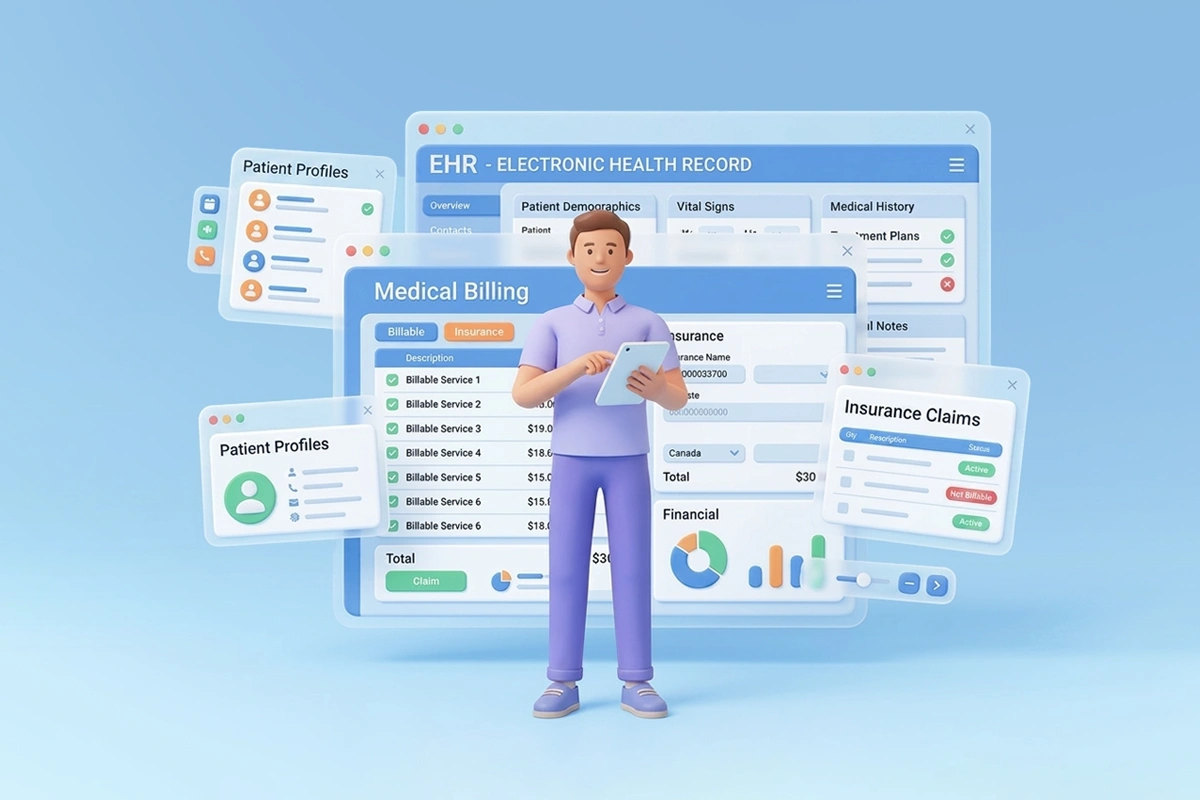
Today, appointments are tied to far more than a provider’s availability. Scheduling now intersects with client records, billing workflows, chart notes, reminders, reporting, provider coordination, and ongoing treatment or case management processes. When scheduling operates separately from the rest of the practice management software or electronic health records (EHR) environment, clinics often create unnecessary administrative work, fragmented information, and avoidable workflow inefficiencies.
Connect scheduling, billing, chart notes, and client management in one centralized workflow with CaseRM. Help your clinic stay organized, coordinated, and efficient every day. 🚀
The Problem With Standalone Scheduling Systems
One of the biggest shifts in modern practice management software has been the move away from isolated tools toward centralized operational platforms. A standalone scheduling calendar may help staff reserve time slots, but it often leaves important clinic information disconnected from the actual workflow happening throughout the organization.
For example, front desk staff may book appointments without visibility into outstanding balances, no-show history, or provider-specific scheduling restrictions. Providers may need to switch between multiple systems to review client information or previous visit details. Administrative teams may also spend time manually coordinating scheduling information with billing records, chart notes, or communication systems.
These problems are not necessarily caused by poor appointment scheduling software. They usually happen because scheduling exists independently from the rest of the clinic’s operations.
Integrated appointment scheduling changes that dynamic by introducing automation that connects appointments directly to client records, financial workflows, chart notes, communication systems, and operational reporting. This gives clinics better visibility across departments while reducing the amount of manual coordination required throughout the day.
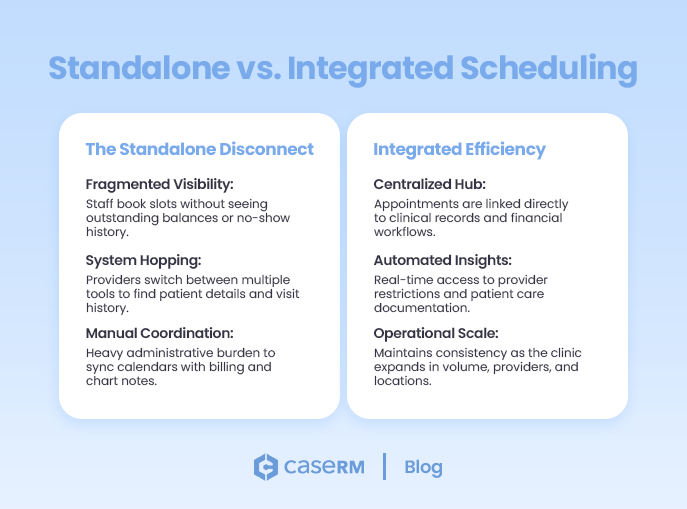
Processes that may seem manageable in smaller clinics often become increasingly difficult to coordinate manually as practices expand across providers, locations, and growing client volumes. As clinics grow, centralized scheduling visibility becomes far more important for maintaining consistency and organization.
Better Visibility Improves Everyday Clinic Operations
One of the biggest advantages of integrated scheduling is immediate access to relevant client and operational information during the booking process. Staff no longer need to move between multiple applications or manually search for scheduling, financial, or client history details before confirming appointments.
Information such as outstanding balances, payer details, previous appointment history, provider assignments, scheduling restrictions, alerts, or internal notes can be visible directly within the scheduling workflow itself.
That visibility has a meaningful impact on daily clinic operations.
If a client has repeatedly missed appointments, staff can identify the pattern immediately while booking. If follow-up billing is required before another visit is scheduled, the information is already available. Providers can also review important client alerts or scheduling notes before the appointment begins.
These improvements may seem small individually, but together they help reduce friction, boost patient satisfaction, and enhance the patient experience throughout the clinic while improving organization and communication between staff members.
Online Booking Reflects Changing Client Expectations
Client expectations around scheduling have changed significantly over the last decade. Much of this shift has been driven by the growth of digital self-service experiences across service-based industries such as health and wellness clinics, massage therapy practices, spas, salons, fitness centers, and other appointment-driven businesses. People have become accustomed to managing appointments online without needing to call or wait for staff assistance. Increasingly, they expect healthcare providers and medical practices to offer the same level of convenience and accessibility in patient scheduling.
For many clients, calling a clinic during business hours is no longer the preferred method of booking an appointment. Work schedules, family responsibilities, and limited office hours often make phone-based scheduling inconvenient. Online appointment booking allows clients to schedule visits whenever it is most convenient for them, including evenings, weekends, and outside regular clinic hours.
This flexibility creates opportunities not only for better client convenience, but also for clinic growth. A clinic that accepts appointment requests online effectively keeps its scheduling process open 24/7, even when administrative staff are unavailable. Potential clients searching for services after work hours can still discover the clinic, view availability, and book appointments immediately instead of waiting until the next business day to call the office.
That accessibility can directly influence client acquisition. If scheduling feels difficult or inconvenient, potential clients may continue searching for another provider with a simpler online booking experience. Clinics that offer integrated online scheduling often reduce this friction and improve the likelihood of converting website visitors into booked appointments.
Self-service scheduling also gives clients greater control over the booking process. Instead of waiting on hold or exchanging multiple calls with staff, clients can immediately view available appointment times, select providers, confirm bookings, and reschedule or manage schedule changes electronically. When connected directly to practice management software and EHR systems, these interactions become part of a centralized workflow instead of a separate administrative task requiring manual follow-up.
Online Booking Sits at the Intersection of Clinic Operations
Beyond client convenience, online booking now plays a central operational role and function inside modern clinics.
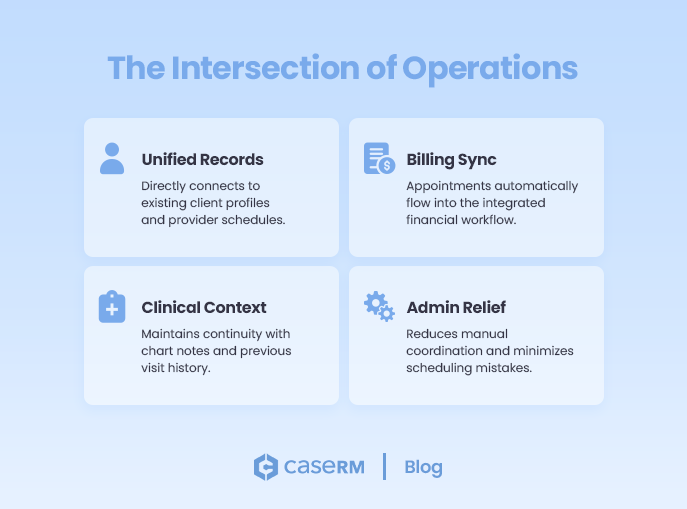
On its own, online scheduling is already a major convenience improvement. But its full value becomes much more apparent when it operates inside a unified practice management environment.
Rather than generating disconnected booking requests that staff need to manually process elsewhere, integrated online scheduling can immediately connect appointments to the client’s existing record, provider schedule, billing workflow, chart notes, and communication settings.
This creates a smoother experience for clients while reducing administrative workload, minimizing scheduling mistakes, and improving coordination throughout the clinic.
How Integrated Scheduling Works in Practice
When a client books an appointment online, the scheduling process can trigger several workflows automatically inside the practice management system. The appointment may immediately appear on the provider’s calendar, update room availability, attach to the client’s existing file, and initiate automated confirmation messages or intake and consent forms.
At the same time, scheduling data can connect directly to treatment plans, billing workflows, insurance tracking, chart notes, reminders, and reporting systems without requiring staff to manually re-enter information into separate applications.
If the appointment is cancelled or rescheduled, those updates can synchronize throughout the system in real time. This helps clinics reduce administrative overhead, manage a digital waitlist, and improve scheduling accuracy and coordination across departments.
Why Scheduling and Billing Should Work Together
Scheduling plays a much larger role in clinic finances than many people initially realize. Appointments often trigger invoices, insurance claims, payment tracking, and financial reporting processes. When scheduling and billing systems are disconnected, clinics frequently end up duplicating work manually, increasing the risk of missed charges, delayed invoicing, reconciliation problems, or incomplete financial records.
When appointments, billing, and insurance workflows are linked together, clinics gain better financial visibility while reducing unnecessary administrative work. Staff spend less time manually transferring information between systems, and financial records become more accurate and consistent across the organization.
This level of integration becomes especially important in clinics managing ongoing treatment plans, prepaid service packages, recurring care programs, or insurance-authorized visits. In these environments, appointments are often directly connected to approved visit counts, treatment balances, reassessment schedules, and ongoing client care plans.
Integrated scheduling systems can automatically apply service charges to the client file when appointments occur while simultaneously updating the remaining number of approved visits, available sessions, or authorized treatment amounts. This helps keep treatment plans accurate and up to date without requiring staff to manually track visit usage across multiple systems or spreadsheets.
Providers and administrative staff can also gain immediate visibility into remaining visits or treatment balances directly during the scheduling process. As treatment plans begin approaching exhaustion, the system may trigger reminders indicating that reassessment appointments, treatment renewals, or additional authorization may soon be required. This helps clinics maintain continuity of patient care while reducing the likelihood of interrupted treatment plans or outdated authorization information.
As practices grow, this level of workflow coordination becomes increasingly important for maintaining accurate financial records, organized treatment tracking, and efficient day-to-day clinic operations.
Connected Scheduling Data Supports Better Decision-Making
Appointment scheduling generates a large amount of operational data throughout the day. Every booked visit, cancellation, rescheduled appointment, no-show, provider assignment, and completed treatment creates information that can help clinics better understand how the practice is operating.
When scheduling exists within an integrated practice management software environment, clinics gain access to more reliable and actionable reporting. Appointment activity can connect directly to provider utilization, billing activity, client retention patterns, treatment history, and financial performance.
This helps clinics identify trends that may otherwise go unnoticed. Administrators may detect recurring no-show patterns, appointment bottlenecks, underutilized provider schedules, or high cancellation periods during specific times of day. Clinics can also better evaluate how scheduling activity relates to revenue generation, service demand, and ongoing case activity.
Data quality also improves when scheduling information is maintained within a centralized system instead of being spread across disconnected applications or spreadsheets. This reduces manual reconciliation work while giving clinics more reliable operational insight for planning and decision-making.
Over time, better scheduling visibility helps clinics make more informed decisions to optimize staffing levels, provider availability, scheduling policies, service expansion, and resource allocation.
Integrated Communication Creates Smoother Workflows
Appointments naturally trigger several types of communication, including confirmations, reminders, cancellations, schedule updates, intake instructions, and follow-up notifications. In disconnected environments, clinics often rely on separate systems or manual processes to manage these interactions.
Integrated scheduling systems simplify this process by allowing automated reminders and notifications to operate directly within the scheduling workflow itself. Automated communication helps reduce repetitive administrative work while creating a more consistent client experience.
This also reduces pressure on front desk staff who are often balancing phone calls, in-person client interactions, scheduling changes, and administrative coordination simultaneously throughout the day. Reducing repetitive scheduling communication allows staff to focus more attention on client service and clinic operations rather than constant manual follow-up tasks.
Connecting Appointments Directly to Client Files
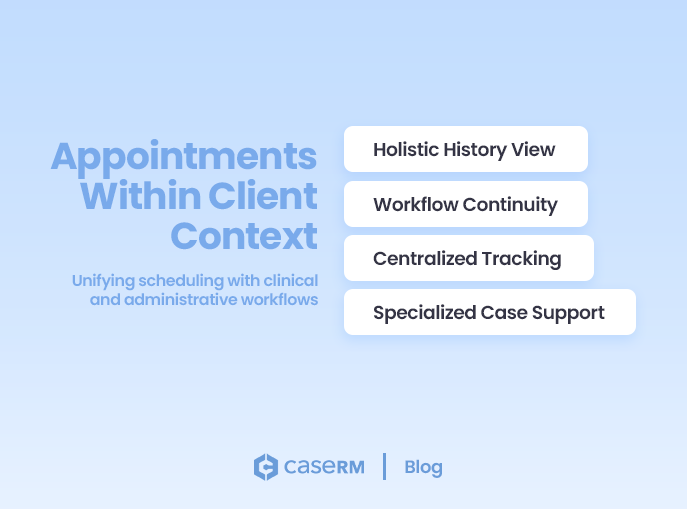
One area that is often overlooked is the value of viewing appointment activity directly within the client file. When booked appointments are connected to the individual client record, staff gain a much clearer understanding of the client’s overall history and relationship with the clinic.
Instead of treating the calendar as a completely separate operational area, appointments become part of the broader clinical and administrative workflow. Staff can more easily review past visits, upcoming appointments, provider history, cancellations, and ongoing case activity within a single location.
In practices managing recurring care, rehabilitation programs, or multiple active case files for the same client, this continuity becomes especially valuable.
Multi-Calendar Coordination Helps Clinics Stay Organized
As clinics grow, scheduling complexity increases significantly. Coordinating multiple providers, locations, treatment rooms, and appointment types becomes much harder when calendars and workflows operate independently from one another.
Integrated scheduling systems with centralized multi-calendar visibility help clinics stay organized while improving coordination across the practice.
Rather than relying on spreadsheets, disconnected calendars, or manual communication between departments, staff can coordinate schedules more efficiently within a shared operational system. This improves scheduling accuracy, reduces wait times, and helps clinics respond more effectively to cancellations, provider availability changes, and shifting workloads throughout the day.
Real-Time Availability Improves Scheduling Accuracy
As online scheduling becomes more common, maintaining accurate availability across providers and locations becomes increasingly important.
Integrated scheduling systems provide centralized real-time visibility into provider schedules, treatment rooms, blocked times, appointment updates, and cancellations as they occur. This helps reduce double-bookings, scheduling conflicts, and outdated appointment availability.
Real-time synchronization is especially important for online appointment booking. If a provider’s schedule changes or a cancellation occurs, the system can immediately update available booking times online. Without this level of coordination, clinics risk displaying inaccurate availability that no longer reflects the actual schedule.
Accurate scheduling visibility also improves internal coordination between front desk staff, providers, and administrators. Everyone works from the same scheduling information rather than relying on separate calendars or manual updates.
Over time, this flexibility helps clinics respond more efficiently to schedule changes while improving resource utilization and overall scheduling accuracy.
Modern Clinics Need More Than a Digital Calendar
Electronic appointment scheduling was an important step forward when it replaced traditional paper agendas. It improved accessibility, collaboration, and scheduling efficiency across clinics and medical practices. But modern healthcare environments now require far more than a shared digital calendar.
Today, scheduling sits at the center of clinic operations. Appointments influence provider coordination, billing activity, communication workflows, charting, resource allocation, reporting, and the overall client experience. When scheduling systems operate separately from the rest of the practice management software or EHR environment, clinics often face fragmented information, duplicated administrative work, and unnecessary complexity.
Integrated appointment scheduling helps clinics streamline daily operations by connecting scheduling directly to client records, financial workflows, communication systems, chart notes, and operational reporting tools. Online appointment booking further extends these advantages by giving clients convenient 24/7 access to scheduling while helping clinics improve accessibility, visibility, and new client acquisition.
For modern medical practices, online scheduling is no longer simply a convenience feature. It has become an important part of delivering a more organized, scalable, and connected client experience.
The real value of integrated appointment scheduling is not simply booking appointments electronically. It is creating a coordinated scheduling and workflow environment that helps clinics reduce administrative friction, improve care coordination, maintain better operational visibility, and support long-term practice growth.